

Nurture Principles
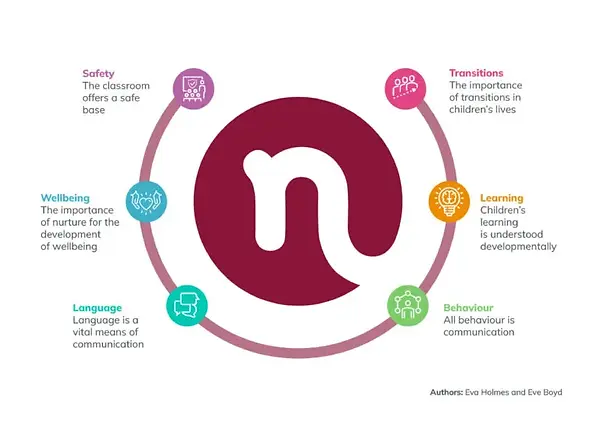
We follow the 6 Principles of Nurture throughout every thing we do in school including in our Nurture provision - The Nest.
1. Learning
Children’s learning is understood developmentally
We understand that children are at different stages of development - socially, emotionally, physically and in their learning. We aim to deliver an inclusive education by responding to their developmental level in each of these areas. We make adaptations to meet the needs of all of our children so they can participate in lessons. Some children receive support through interventions to help them in their learning and in their social and emotional development.
2. Safety
School offers a safe base
Our school is a safe, calm and inclusive environment that nurtures all children. We support the development of positive relationships with each other and with staff. Adults are consistent in their approach to children and make the important link between emotional regulation and learning.
Predictable routines are explained and practised, and there are clear expectations and positive models of how all adults in school relate to children. This creates a positive learning environment and promotes a culture of belonging for all pupils.
3. Wellbeing
The importance of nurture for the development of wellbeing
In school, strategies are used to promote the welfare and wellbeing of children and young people, as well as staff welfare and wellbeing. We strive to promote positive attitudes to learning by cultivating confidence, motivation, and emotional resilience. Achievements and attainments are celebrated and pupil voice is listened to.
4. Language
Language is a vital means of communication
We want children to be able to understand and express their thoughts and feelings. Adults in school understand the importance of their own language towards children and how this can impact them. We use the Zones of Regulation and Restorative Practice to help children to understand and express how they are feeling as well as understand the feelings of others.
We provide opportunities for pupils, parents and staff to express their views and school staff model how to share feelings and experiences.
5. Behaviour
All behaviour is communication
We understand that children communicate through their behaviour. We help children to understand their feelings, express their needs appropriately, and use supportive language to resolve situations. Our first responsibility in dealing with difficult or challenging behaviour, after safety, is to try to understand what the child is trying to tell us.
School staff are calm and consistent, and understand that children may communicate their feelings in different ways. Children are encouraged to reflect on their behaviour, and understand how to express their emotions appropriately.
We have areas in every classroom and around school where children are given space and support to regulate their emotions and we aim to recognise potential triggers and anxieties that could be avoided or reduced.
6. Transitions
The importance of transitions in children’s lives
Children experience many transitions throughout their time in school, and on a daily basis; transitions from home to school, between classes and teachers, from breaktime to lessons, special days, school visits or moving from primary to secondary school. Changes in routine can be difficult for many children, and school staff help children to transition with carefully managed preparation and support.
Staff understand the emotions that may be triggered by both small and large changes, and children are pre-warned about changes in routines using visual timetables, discussions and social stories.